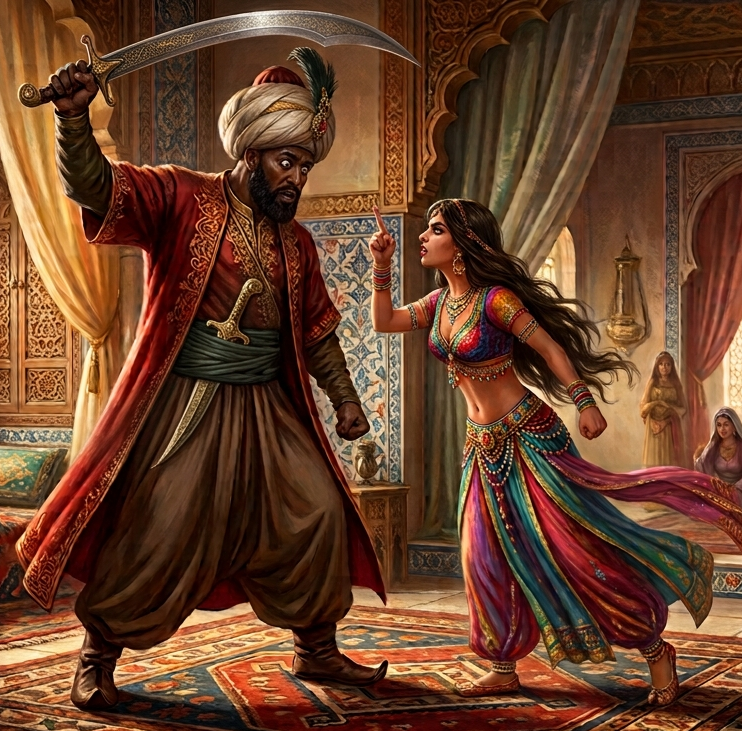
The Abduction from the Seraglio
Wolfgang Amadeus Mozart
Libretto by Gottlieb Stephanie
based on
Christoph Friedrich Bretzner's
oder Die Entführung aus dem Serail
Singspiel in three acts
In German with English titles
Friday, Oct 9 - 7 p.m.
Sunday, Oct 11 - 2 p.m.
Saturday, Oct 17 - 7 p.m.
Sunday, Oct 18 - 2 p.m.
at the Lucie Stern Theatre
1305 Middlefield Rd., Palo Alto, CA 94301
Performances are 3 hrs long, including 2 intermissions.
FREE Preview with Piano
Thursday, Oct 1, 2026 - 7:00 p.m.
at the
Holt Building
221 Lambert Ave, Palo Alto, CA 94306
Abduction from the Seraglio - 2026 - Media Gallery
PRODUCTION PHOTOS
About
Abduction
from the
Seraglio
World Premiere: Burgtheater - Vienna
WBO Premiere: Feb 13, 2015
Pictured: Aerial view of the Burgtheater in Vienna, Austria
The 25-year-old Mozart arrived in Vienna in 1781, looking for composing opportunities. A couple of years earlier the Austrian Emperor, Joseph II, had started a cultural project called the Nationalsingspiel, intended to support the composition of new operatic works in German and counterbalance the Italian opera, which was extremely popular in Vienna at the time.
Johann Gottlieb Stephanie was appointed by the Emperor to run this project, and Mozart sought him out as soon as he arrived in Vienna, hoping for a commission.
The general manager of the Burgtheater at the time, Count Franz Xaver Orsini-Rosenberg heard Mozart play some of his Idomeneo at a house party. He was very impressed and he became instrumental in getting Stephanie to put together a libretto for Mozart to compose a singspiel. Stephanie chose to adapt (plagiarize may be more accurate) Bretzner's work.
Mozart was enthusiastic about it and worked quickly at first, then demanded major changes to the libretto. Stephanie obliged, but the project's timeline suffered, and the premiere, which was a resounding success, had to wait until July of 1782.
Essentially a comic opera, Abduction is an orientalist piece, presenting the Ottoman Empire in a sanitized Western European light. The score makes somewhat oblique references to the music of Turkish Janissary bands, especially in the choral sections. Aside from that, there are major vocal challenges for the main characters, particularly Konstanze's aria "Martern aller Arten" and Osmin's aria "O, wie will ich triumphieren." Interestingly, the piece provides a very flattering depiction of the Ottoman ruler, Pasha Selim, who is presented as a sophisticated ruler and a sensitive man, unwilling to force his love on Konstanze.
This is the piece that gave rise to the famous "too many notes" comment from Emperor Joseph II, though, to the Emperor's credit, the original quote: "gewaltig viel Noten" translates more accurately as "an awful lot of notes."
The basic premise of the story reflects a real phenomenon. For several centuries until the French conquest of Algiers in 1830, pirates from Northern Africa would regularly board ships in the Mediterranean, capture people, and demand ransom from European countries or sell people into slavery. In this case, Konstanze, her English servant Blonde, and Belmonte's servant Pedrillo are captured and sold to Pasha Selim. Pedrillo becomes a servant in the Pasha's household, and the two women end up in the Pasha's harem.
The story follows the adventures of Belmonte and Pedrillo as they try to rescue their respective girlfriends, Konstanze and Blonde, from the grip of Pasha Selim’s guards, escape the palace and sail back to Spain. Along the way, we witness early women’s lib, as practiced by Blonde on Osmin, we get some understanding of how women are kept and treated in the harem, and we learn a thing or two about the universality of human nature, regardless of culture or the color of the skin.
We present this fun and extremely accomplished score in its full version without cuts, with a superb cast and chorus and with period setts with costumes.
Creative team
José Luis Moscovich - Conductor and Stage Director
Peter Crompton - Set and Projection Designer
Callie Floor - Costume Designer
Adrian Gilstrap - Lighting Designer
Frederic O. Boulay - Projection Systems Designer
Shirley Benson - Props Designer
Giselle Lee - Sound Designer
Pictured: Floorplan for a set design by Peter Crompton
Cast
Konstanze - Michelle Allie Drever
Belmonte - Hak Soo Kim*
Osmin - Casey Germain
Pedrillo - Caleb Anderson
Blonde - Lora Bashmakian*
Bassa Selim - Kirk Eichelberger
* First appearance with WBO
Photo: Otak Jump
Chorus
Bruce Olstad - Chorusmaster
Joanne Bogart - Chorus Manager
Dee Baily, Mark Baushke, Didier Benoit, Joanne Bogart, JoAnn Close, Cassidy Fink, Michael Good, Barry Hayes, Lynne Haynes-Tucker, Joanne Newman, Lindarae Polaha, Philip Schwarz
Ashley Shannon, Jessica Shannon, Miles Spielberg
Jo Taubert, Timothy Tsang
Orchestra
Kristina Anderson (concertmaster)
Violin I · Emily Chiet, Virginia Smedberg
Violin II · Lisa Zadek
Viola · Donny Lobree
Cello · Janet Witharm, Thomas Shoebotham
Bass · Christy Crews
Flute/Piccolo · Michelle Caimotto
Oboe/English Horn · Meave Cox
Clarinet - Arthur Austin
Bassoon · Amy Duxbury
Horn · Cathleen Torres, Diane Ryan
Timpani · Don Baker
Percussion · Norm Peck
~
Orchestra Librarian · Virginia Smedberg
Orchestra Manager · Christy Crews
* First appearance with West Bay Opera
Abduction from the Seraglio - 2026 - Press and Reviews